
Content note: This page discusses residential schools, colonial policies and the experiences of Indigenous children. Some readers may find this material distressing.
If you need support, help is available:
- National Indian Residential School Crisis Line: 1-866-925-4419 (24/7)
- Hope for Wellness Help Line: 1-855-242-3310 or www.hopeforwellness.ca
The Church’s involvement in the residential school system
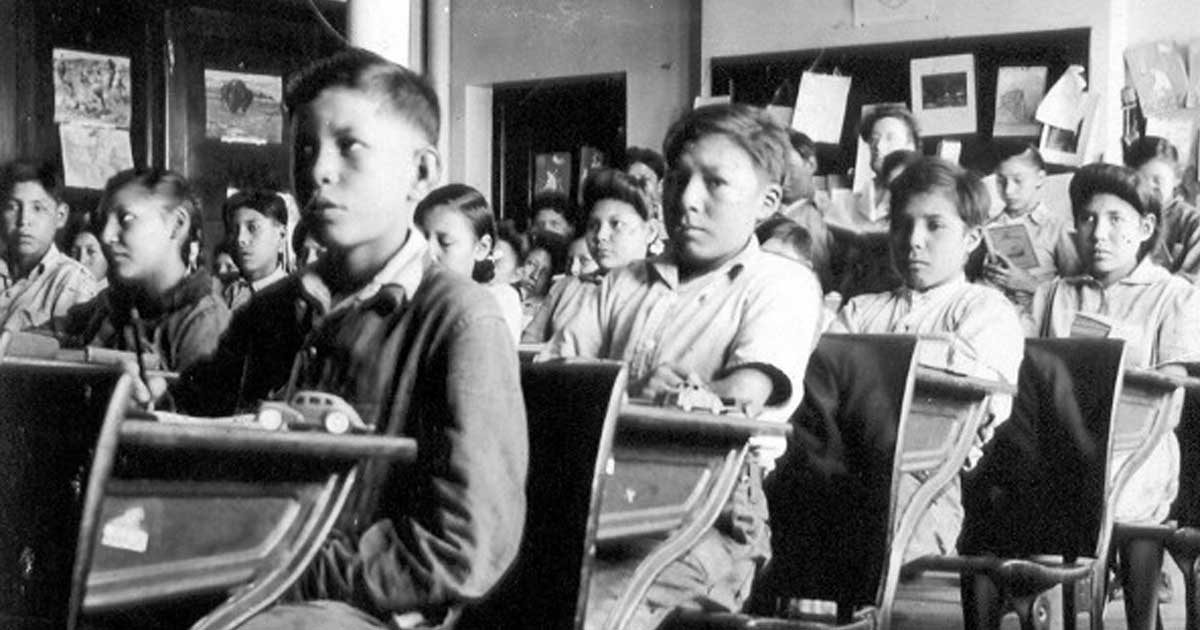
From the 1820s until 1969 the Anglican Church administered about three dozen residential schools and hostels across the country, operating within federal policies that sought to assimilate Indigenous children through government-funded, church-run institutions. These policies separated children from their families, languages and cultural identities and caused profound and lasting harm.
Over time the federal government assumed increasing control of curriculum and operations, and by 1969 it had taken over the remaining Anglican-run schools. In the years that followed many survivors spoke publicly about physical, sexual, emotional and cultural abuse and the intergenerational impacts of separation from home and community.
Archival records held by the General Synod Archives and diocesan archives remain important for ongoing truth-seeking, including research into missing children and unmarked burials in keeping with the Truth and Reconciliation Commission’s Calls to Action 71–76.
Archival context and historical documents
Historical records can help illuminate how the system operated, though many earlier documents reflect only institutional perspectives and do not centre survivors’ experiences. They are best read alongside survivor testimony and contemporary research.
Prepared in 2008, the document linked above reflects dated language and framing. It is shared as a historical resource.
These resources offer further historical context and support ongoing research:
The Church’s reflection on its relationship with Indigenous Peoples did not begin or end in a single moment. Beyond Traplines (1969), written by sociologist Charles Hendry, was one early contribution to this longer process, calling for relationships grounded in dignity and mutual respect. Today the Church continues to learn from Indigenous leaders and communities as the movement toward a self-determining Indigenous Anglican Church grows in clarity and strength.